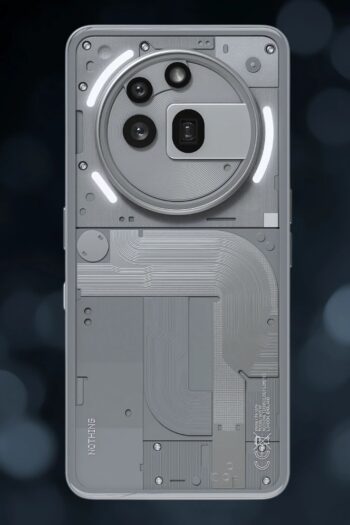
| Design & Aesthetics | Transparent back, Glyph interface (LED notifications), iconic look | Can be fragile or a dust magnet (especially without case); some find Glyph gimmicky |
| Display | Bright AMOLED (up to 4500 nits), 120Hz smooth refresh, great outdoor visibility | No LTPO on lower models (3a, 2a), missing HDR10+ on budget range |
| Performance | Clean software + efficient chips (Snapdragon 7s Gen 3, 8s Gen 4) | Not as powerful as true flagship processors like Snapdragon 8 Gen 3/Elite |
| Cameras | Good hardware (50MP triple cam on 3a/3), periscope zoom in 3a Pro | Camera processing not as refined as Samsung/Pixel in video or low-light |
| Battery & Charging | Large batteries (5000–5500mAh), fast wired (up to 65W), wireless & reverse (Phone 3) | No wireless charging on lower models (2a/3a); no charger in box |
| Software Experience | Nothing OS: near-stock Android, smooth UI, Essential Key & Glyph customization | Minor bugs early on; AI tools not as advanced as Google/Samsung |
| Updates & Support | 3–5 yrs OS, 7 yrs security (esp. on Phone 3), transparent update roadmap | Limited physical service centers vs Samsung/OnePlus |
| Innovation | Bold designs, Glyph UI, Essential Key, open design philosophy | Not all users find features practical (e.g., Glyph-only alerts) |
| Price-to-Value Ratio | Good pricing (3a around ₹21K, 3a Pro under ₹30K), high-spec midrangers | Phone (3) is close to ₹80K—competes with better-specced rivals |
| Ecosystem (Brand) | Unique identity, cross-product styling (earphones, accessories) | Small ecosystem; fewer accessories or integrations than Samsung/Apple |